Haupt Heavily Cited by Justice Jackson in Supreme Court Conversion Therapy Case
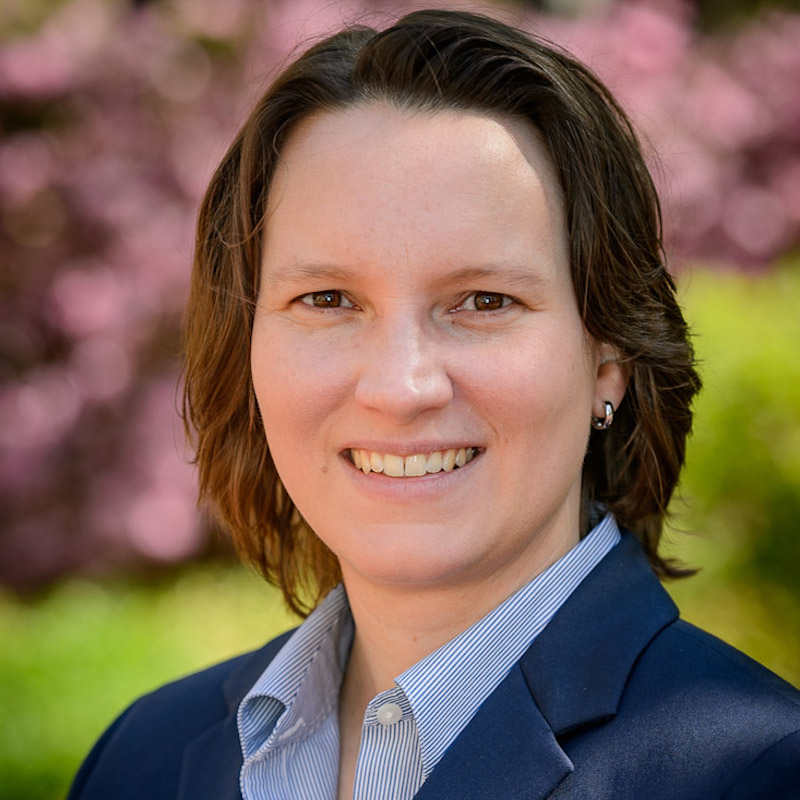
04.01.26 — A dissenting opinion filed by Justice Ketanji Brown Jackson in Chiles v. Salazar, No. 24–539, heavily cites a Yale Law Journal article, “Professional Speech,” by Professor Claudia E. Haupt, a First Amendment scholar whose work sits at the intersection of free speech, health law and the regulation of professional expertise. In a case pitting Colorado’s ban on conversion therapy against a licensed mental health counselor’s First Amendment claims, the majority ruled that the law — as applied to talk therapy — regulates speech based on viewpoint and struck it down. Jackson, dissenting alone, relied on Haupt’s professional speech theory to argue that the majority’s analysis fails to account for the distinctive constitutional status of speech that occurs within professional relationships.
According to Haupt, Jackson correctly notes in her dissent that “Our First Amendment jurisprudence does not treat speech as existing in a vacuum. Instead, how the First Amendment applies to a state’s power to regulate speech depends upon the context in which the regulation of speech occurs.”
“In my scholarship, I explain that professional speech is unique in both its structure and content. It’s different from other types of speech because it structurally occurs within a distinctive social relationship marked by knowledge asymmetries and a basis in trust. Its content communicates a professional knowledge community’s insights,” said Haupt, faculty co-director of Northeastern Law’s Center for Health Policy and Law and the author of the forthcoming book Professional Speech: Knowledge Communities and the Regulation of Expertise (Cambridge University Press).
About Northeastern University School of Law
The nation’s leader in experiential legal education since 1968, Northeastern University School of Law offers the longest-running, most extensive experience-based legal education program in the country. Northeastern guarantees its students unparalleled practical legal work experiences through its signature Cooperative Legal Education Program. More than 1,000 employers worldwide in a wide range of legal, government, nonprofit and business organizations participate in the program. With a focus on social justice and innovation, Northeastern University School of Law blends theory and practice, providing students with a unique set of skills and experiences to successfully practice law.
For more information, contact [email protected].