Fall Speaker Series: Issues in Human Rights and Humanitarian Law
Each fall, the Center for Global Law and Justice sponsors a lecture series on cutting-edge issues in human rights and humanitarian law, featuring leading scholars in international law and related fields. Through the series, the Center provides Northeastern students, faculty, and community members with the opportunity to engage with key members of the human rights and humanitarian law fields.
Fall 2025 Speakers Series
In fall 2025, the series will include talks by Zohra Ahmed (Boston University), Rebecca Hamilton (American University), Ardi Imseis (Queen’s University Canada), Kieran McEvoy (Queen’s University Belfast), Mara Revkin (Duke University) and César Rodríguez-Garavito (New York University).
September 30, 2025 | 1:35 - 3:15 PM ET | 44 Dockser Hall and Virtual
“Climate Change on Trial: Mobilizing Human Rights Litigation to Accelerate Climate Action”
Featuring:
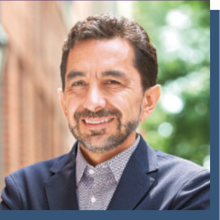 César Rodríguez-Garavito
Professor of Law and Chair of the Center for Human Rights and Global Justice, NYU; Director, NYU Earth Rights Research & Action (TERRA) Clinic; Director, NYU More-than-Human Rights (MOTH) Program
This talk, based on the recently published “Climate Change on Trial” (Cambridge Univ. Press), tells the twenty-year socio-legal story of human rights-based climate change litigation. Based on an original database of the totality of rights-based climate change (RCC) lawsuits around the world as well as interviews with leading actors and participant observation in the field, the talk explains the rise and global diffusion of RCC litigation. It combines insights from global governance, international law, climate policy, human rights, and legal mobilization theory in order to offer a socio-legal account of the actors, strategies, and norms that have emerged at the intersection of human rights and climate governance.
Respondent:
Sharmila Murthy
Professor of Law and Public Policy and Faculty Co-Director, Center for Public Interest Advocacy and Collaboration, Northeastern University
Watch video:
October 9, 2025 |1:35 - 3:15 PM ET | Dockser Hall Moot Courtroom & Virtual
“Apologies, Political Violence and Dealing with the Past”
>> Register online
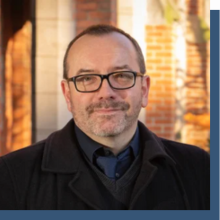 Featuring:
Kieran McEvoy
Senator George J. Mitchell Chair of Peace, Security and Justice and Professor of Law and Transitional Justice, Senator George J. Mitchell Institute for Global Peace, Security and Justice, Queen’s University Belfast
This paper examines the intersection between human rights and humanitarianism in efforts to get armed groups to take responsibility for their past human rights violations. Drawing on almost three decades of experience in working with armed groups in Northern Ireland, as well as comparative fieldwork conducted in over a dozen conflicted, authoritarian or transitional societies, the paper explores how to get armed groups to engage with transitional justice processes such as truth recovery, reparations, apologies and acknowledgement for past harms. It examines the routes towards armed groups 'doing the right thing' through notions of honour and self image, relations with their 'base', aspirations towards political respectability, the role of law and proposes a schema by which the legitimacy of reparative actions by armed groups can be assessed.
Respondent:
Gordana Rabrenovic
Associate Professor of Sociology, Director of the Brudnick Center on Violence and Conflict, Northeastern University
 October 16, 2025 | 1:35 - 3:15 PM ET | 44 Dockser Hall (In Person Only)
“The Price of Consent”
Featuring:
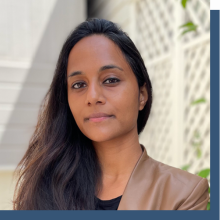
Zohra Ahmed
Associate Professor of Law, Boston University School of Law
This talk demonstrates how hierarchies in the international economy and in international financial institutions have facilitated the U.S.-led Global War on Terror (GWOT). Using U.S.-Pakistan relations as a case study, it shows how the United States has deployed its powerful position at the International Monetary Fund (IMF) to claim Pakistan's consent for its military activities in the region. In the GWOT's first decade, beginning in 2001, the United States openly sought forcible regime change, as in Afghanistan and Iraq; in its second and (now) third decades, the United States has waged covert counterinsurgency campaigns allegedly against militant groups in Muslim-majority states. The United States has depended on partnerships with other states, such as Pakistan, to engage in these military maneuvers. It relies on the doctrine of consent to exonerate its actions, arguing that Pakistani authorities have agreed to its interventions.
Respondent:
Liza Weinstein
Associate Professor of Sociology, Northeastern.University
 October 23, 2025 | 1:35 - 3:15 PM ET | 44 Dockser Hall & Virtual
"The Master Narrative in Human Rights"
>> Register online
Featuring:
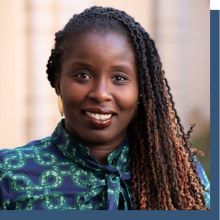
Matiangai Sirleaf
Nathan Patz Professor of Law, Maryland Carey Law
Professor Sirleaf will be joining us via Zoom. Attendees may join us in person or over Zoom.
The stories we are told and promulgate around the world about the struggles to be treated as human and to have rights recognized, respected, protected, and fulfilled matter. The Master Narrative in human rights foregrounds the empires with the least moral authority to speak on slavery and racial violence as the generative settings for understanding why norms prohibiting such conduct are necessary. Looking only at what the powerful were(are) able to enact into law produces a shallow vision of human rights, which leaves Black and other subordinated peoples at the margin. The movements towards freedom of the enslaved, formerly enslaved, and those subjected to other forms of unfreedoms, shifted images, ideas, political imaginations, and expanded the frame of humanity. It is imperative to alter the settings where human rights narratives traditionally emerge and swap the underdeveloped characters in human rights to protagonists in their own narratives. By centering the relegated histories of rights priorities of Black and other subordinated peoples, we can critically investigate whether the legal regime of human rights is bringing us closer to freedom.
Respondent:
Adam Hosein
Professor of Philosophy and Affiliate Professor of Law; Director of the Politics, Philosophy and Economics Program; Northeastern University
 November 6, 2025 | 1:35 - 3:15 PM ET | 44 Dockser Hall & Virtual
“Enablers of Atrocity”
Featuring:
Rebecca Hamilton
Professor of Law, American University Washington College of Law
>> View photos
The post-World War II Nuremberg Trials marked a watershed moment in international criminal justice by holding individuals criminally responsible for atrocities. Yet, the failure to proceed with the proposed second international trial of industrialists - whose corporate activities materially enabled Nazi crimes, left a critical legacy gap in accountability for corporate enablers of mass atrocities. This gap endures in the design and practice of the International Criminal Court (ICC), which, despite its groundbreaking mandate, remains primarily focused on direct perpetrators and masterminds. While ICC was conceived as a guardian against genocide, war crimes, and crimes against humanity, its doctrinal and institutional design limit its ability to reach enablers. Drawing on insights from the burgeoning literature on atrocity prevention, Enablers of Atrocity argues that enablers - be they individuals, entities, or, typically, both -- provide the necessary psychosocial, physical and technological infrastructure and/or resources, for mass atrocities to be committed. It explains how these enablers typically escape international criminal liability due to the law's ex post focus, stringent mens rea requirements, and prosecutorial selectivity. Narrowing in on corporate enablers in particular, and in contrast to their state-enabler counterparts, there is no alternative body of international law through which to hold them accountable when they fall outside of international criminal law’s reach. By developing a typology of corporate enablers - financiers, media outlets, natural resource extractors, weapons suppliers and technology companies -- and situating them within broader institutional and legal ecosystems, the project illuminates the urgent need to extend accountability mechanisms beyond the narrow focus on direct perpetrators and masterminds. To address the corporate enablers accountability gap, the project proposes a multidimensional framework: refining criminal law interpretive strategies, leveraging tort and regulatory regimes, and strengthening institutional incentives across public and private sectors.
Respondent:
Serena Parekh
Associate Dean of Faculty Affairs and Distinguished Professor of Philosophy, Northeastern University
 November 13, 2025 | 1:35 - 3:15 PM ET | 44 Dockser Hall & Virtual
“Evidence-Based Transitional Justice”
Featuring:
Mara Revkin
Associate Professor of Law and Political Science, Duke University
This talk builds on Professor Revkin’s recent Yale Law Journal article, “Evidence-Based Transitional Justice,” coauthored with Ala Profs. Ala Alrababah (Bocconi University) and Rachel Myrick (Duke University). The authors use evidence from a systematic literature review of more than 300 empirical studies of public attitudes toward transitions justice and their own original data from household surveys in Iraq and Ukraine to identify several urgent problems and knowledge gaps in the field. A key finding is that some of the most well-known transitional justice mechanisms, including those employed in South Africa, Rwanda, and Cambodia, failed to achieve their objectives of peacebuilding and reconciliation. The talk calls for greater attention to the experiences and attitudes of affected populations in the design of transitional justice processes and previews findings from the author’s ongoing research in Iraq, South Sudan, and Ukraine.
Respondent:
Risa Kitagawa Amano
Associate Professor of Political Science and International Affairs, Northeastern University
-
With a theme of Issues in Human Rights and Humanitarian Law, CGLJ’s inaugural fall speaker series captured the interest of the Northeastern Law community with topics that included Siege Starvation: A War Crime of Societal Torture; An Abolitionist Critique of Human Rights: Rethinking Responses to Gendered and Racialized Violence; Victim: Gender as Tool and Weapon; Legal Education, International Law and Respect for International Human Rights in the Americas; and From Transnational Borders to No Borders? Commoning, Abolition and Imagining Otherwise.
November 13, 2024

“Legal Education, International Law and Respect for International Human Rights in the Americas”
Featuring:
James Cavallaro
Professor of the Practice, Wesleyan University: Co-Founder and Executive Director, University Network for Human Rights.This presentation (and subsequent paper) seeks to address the relationship between legal education, public international law (and in particular, human rights law), and the incorporation of these standards by countries in the Americas in domestic law, practice and in their international relations. First, we consider the extent to which public international law and human rights are taught in the legal academy across the Americas (focusing on the largest nations). To what extent are legal professionals trained to be familiar with international public law and human rights standards? We then consider the degree to which human rights standards are incorporated into domestic legal standards (beginning with the national constitution of states in the Americas). Finally, we seek to draw connections between the study of human rights standards in law school, the incorporation of these standards into domestic law and their application in international relations. We anticipate that low levels of study will lead to lower levels of constitutional incorporation and reference to, and application of, human rights standards in international relations. We also suspect that increased levels of instruction in public international law and human rights may promote greater application of these norms in the Americas.

October 17, 2024
“Victim: Gender as Tool and Weapon”Featuring:
Vasuki Nesiah
Professor of Practice, Galatin School, New York UniversityAbstract
This chapter is a window into the work of International Conflict Feminism (ICF) in relation to the International Criminal Court. ICF is a project of ideas and passions, legal proposals and policy orientations; in making knowledge claims about women in conflict it is also helping to interpolate that subject position. This intervention looks at the political purchase of ICF as part of the normative framework guiding and legitimizing “counterterrorism” policies with particular attention to how these have intersected with the work of the ICC in new modalities of lawfare. Against the backdrop of SC action, including its military interventions in Muslim-majority countries, I argue that the driving logics of ICF and ICL have come together in reinforcing and further legitimating hegemonic approaches to counterterrorism, including their often latent, but frequently explicit, Islamophobia. This chapter pays particular attention to how lawfare got defined in contexts such as Afghanistan and Mali, with particular attention to the Al-Hassan case at the ICC as the grain of sand through which we examine the universe at the crossroads of sharia panic, sex panic and security panic.Respondent:
Jelena Golubović
Assistant Professor of Cultural Anthropology and International Affairs
Northeastern University, College of Social Sciences and Humanities
 October 10, 2024
“An Abolitionist Critique of Human Rights: Rethinking Responses to Gendered and Racialized Violence”Featuring:
Karen Engle
Minerva House Drysdale Regents Chair, Professor of Law, Founder and Co-director of the Bernard and Audre Rapport Center for Human Rights and Justice, University of Texas at Austin School of LawAbstract:
Contemporary international human rights law increasingly obligates states to heighten their criminalization of certain human rights violations, including gendered, racialized and homophobic violence. This book uses a prison and police abolitionist lens to challenge this trend. It focuses on the European Court of Human Rights (ECtHR), arguing that the Court’s reliance on criminalization threatens to undo earlier European approaches to penality that resonate with abolitionist thought. It also contends that the criminalization approach provides the Court with an alibi for not recognizing or attending to the deeply structural racialized, colonial, sexual, gendered, and homophobic violence in Europe, particularly but not only against Roma communities and Black and Muslim migrants. Challenging human rights advocates and judges to take seriously prison and police abolition in Europe and elsewhere, the book (re)introduces the insights of European penal abolitionists from the 1970s, considering them alongside more recent U.S. abolitionist activism and thought that attends more explicitly to racialized and gendered violence. It calls for the ECtHR to bolster the penal minimalism found in some of its caselaw and pave the way for an anti-carceral turn among human rights courtsNortheastern Respondent:
Daniel Medwed
University Distinguished Professor of Law and Criminal Justice
 September 26, 2024
“Siege Starvation: A War Crime of Societal Torture”Featuring:
Tom Dannenbaum
Associate Professor of International Law, The Fletcher School, Tufts UniversityAbstract:
Starvation in war is resurgent. Recently or currently, it has devastated populations in Ethiopia, Palestine, South Sudan, Sudan, Syria, Ukraine, Yemen and elsewhere. The practice has also drawn the scrutiny of the United Nations Security Council. And yet, what precisely is criminally wrongful about starvation methods remains underspecified. A common way of thinking about the criminal wrong is as a form of killing or harming civilians. Although its differentiating particularities matter, the basic wrongfulness of the crime inheres, on this view, in it being an attack on those who ought not be attacked. For some, this supports a broad interpretation of the starvation ban. However, for others, the graduality of starvation preserves the continuous possibility of the avoidance or minimization of civilian death or harm in a way that direct kinetic attacks do not. In combination with the method’s purported military utility, this incrementalism has underpinned arguments for the permissibility of certain forms of siege and other deprivation and a narrow interpretation of the starvation crime. Drawing on the moral philosophy of torture, Tom Dannenbaum rebuts these arguments and offers a distinctive normative theory of the crime. Starvation, like torture, is peculiarly wrongful in its distortion of victims’ biological imperatives against their capacities to formulate and act on higher-order desires, political commitments, and even love. This process does not merely raise the cost of fulfilling those commitments. Instead, starvation tears gradually at the very capacity of those affected to prioritize their most fundamental commitments, regardless of whether they would choose to do so under the conditions in which choice is a coherent concept. Rather than palliating, the slowness of starvation methods is at the crux of this torturous wrong. Recognizing this redefines the meaning and place of the crime in the framework of international criminal law.Northeastern Respondent:
Denise Garcia
Professor of Political Science and International Affairs